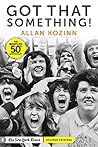
Allan Kozinn is a music critic who covered both Classical music and The Beatles for The New York Times, and he tells the story of how one song changed everything. By the end of 1963 The Beatles were huge in Britain and much of Europe, but couldn’t buy a radio play in the U.S. EMI’s US label, Capitol, was offered their recordings and passed on them. songs like She Loves You were on otherwise obscure labels (Swan Records in this case), and previously their recordings were on Vee-Jay records until the contract was terminated because Vee-Jay failed to pay the royalties that were due. Capitol was finally persuaded to release “I Want To Hold Your Hand”, and the story of that is also fascinating. By February of 1964 The Beatles were leading the British Invasion and nothing would be the same.
If you are a fan of The Beatles you should get this. It is a fun read, and Kozinn is a good writer and very knowledgeable on the topic.
Google started as the project of graduate students at Stanford, but as it became successful and grew they realized they needed some managerial assistance, and this book comes from two of the people they brought in: Eric Schmidt (Executive Chairman) and Jonathan Rosenberg (SVP of Products). As one of the most successful companies in the world (perennially in the top three for market capitalization) knowing how they did that is worth some consideration. And this is an interesting book for that. Their story is that they were brought in to apply management skills but quickly learned that Google could not be managed the way they were used to doing it. They focus on empowering creative people to do awesome things, and there is certainly evidence that Google does that, but it is also true that this is an insider’s book that is not going to air any dirty laundry. So take it with a grain of salt.
This is one of Heinlein’s juveniles, but not one of the best ones. The protagonist is a teenage girl who along with her younger brother goes on a trip with her Uncle that takes them from Mars to Venus. While the trip is meant to go to Earth, we don’t really see that part because the action is all on the spaceship and on Venus. Podkayne is not overly bright, and to me a not very likeable character. Her brother is smarter, but not overly likeable either. Podkayne is somewhat inquisitive, and gets pulled into an interplanetary plot aimed at her Uncle, who is using their presence to disguise a political trip. Podkayne gets caught by his enemies, is endangered, but in the original manages to survive mostly because the publisher insisted. Since then, the book has been restored to Heinlein’s original ending, which has her killed. I cannot imagine why the publisher had a problem with book aimed at juveniles where the protagonist gets killed, mostly as a result of her stupidity. Personally, I tend to the view that I don’t expect teenagers to exhibit great wisdom and responsibility.
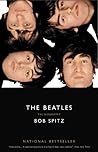
This is not a bad book if you want a single volume history of the band. It starts with each of the Beatles as boys, and follows them through the early years of the Quarry Men, then the time in Hamburg, through Beatlemania and up to the breakup. It is not as comprehensive or as reliable as Mark Lewisohn’s Tune In, but then nothing else is. Spitz does get most of the main points correct. So while it is overall a good book, there are factual errors. It was generally well-reviewed and was the first major re-evaluation of The Beatles following the Anthology release.
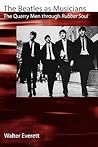
This is ne plus ultra of books musically analyzing what The Beatles accomplished in their music. Although it covers the early part of The Beatles career, it was the second volume written, following one the covered from Revolver to the end of the group. And this is not exactly a “fan” book. There is some historical material here, but if you wanted Beatles history you should go to Mark Lewisohn’s magisterial Tune In, which is the last word on that subject. This is a book for musicians, and frankly would probably be mostly incomprehensible to anyone without a grounding in music theory. But if you have the background, I would sit down at a piano and work through this book for a deeper appreciation of the group that changed popular music for their time.
If you only ever read one book on the Irish history this would be an excellent choice. Originally written in 1921 as the Irish Uprising turned into the Irish Civil War, it was intended in part to explain just what all of the issues were. But it is also a work of a master storyteller, and if there is anything the Irish are known for it is story telling. McManus goes all the way back to the stories of the Tuatha De Danaan, a semi-mythical race of gods who invaded Ireland shortly after 2000 B.C. according to the annals. And then he traces the history forward, through the Druids of the centuries BC, St. Patrick and the Christianization of Ireland, and finally the horrible oppressions of the English. This is a book written as a story, not as a scholarly work of history, and is quite accessible. McManus wrote this in large part for Irish-Americans whom he found found woefully lacking in knowledge of Irish history.
I originally read this as physical book, but it is now available on Amazon as a Kindle book for only $.99. Kind of hard to go too far wrong at that price.
Back in 2016 Cheryl and I made a trip to The Netherlands and Belgium to go on a “boat-and-bike” tour. This consisted of a very basic bunk on a barge that went through the canals and rivers, starting in Amsterdam and ending in Bruges. Each day we would get up, have breakfast, pack lunch, and get out on our bikes for 35-40 miles of biking. When we got to our destination we would rejoin the boat for dinner, and then depending on where were stopped, a night out on the town with our fellow travellers. It was quite nice, and I recommend it.
Given that we knew nearly nothing about the area we would be travelling through, I picked up this volume as a Nook book that I read in preparation, and it serve perfectly well for the purpose. I would not come here for in-depth history or deep analysis of the culture, this is really an historical survey to help fill in some blanks. If that is what you are looking for, this is perfectly serviceable.
Humorous science fiction is not common, but it exists. This is perhaps the highest form of humorous SF, written by a an author for the Doctor Who television series. The Hitchhiker’s Guide to the Galaxy (HGTTG for short) began life as a radio series for the BBC, and then was taken to other media (including novels), where it began to mutate. Each time Adams adapted the work he made changes, though the basic plot does not change.
Arthur Dent, an Earthman, is protesting the destruction of house by the local council, who want to knock it down to construct a bypass. His friend Ford Prefect manages to pry him away long enough to to have a few drinks and reveal that the world is about to be destroyed. Prefect knows this because he is in fact an alien, and the Earth is about to be destroyed to make way for an interstellar bypass. Prefect is also a writer for a publication known as The Hitchhiker’s Guide to the Galaxy, and Prefect knows knows to hitch a ride on passing starships, so they manage to get on the Vogon cruiser that is about to destroy the Earth for said bypass. And so the adventure begins. We learn very quickly that the Earth was initially constructed to be a giant supercomputer devoted to finding the ultimate answer to Life, the Universe, and Everything, which turns out to be 42.
This is just a few of the things that happen within the early pages of this book, which in turn is the first in a series. But it is hilarious, and you should read it. Note that if you have seen the movie, that has its charms, but is no substitute. The original BBC radio series, however, is wonderful.
This is the second in the Nero Wolfe series, and the characters come into a little better focus than in the first. The basic plot revolves around a group of men that were in college together, and one of them is crippled in a hazing accident perpetrated by the others. This has led that group of men to form a “League of Atonement” to help support the crippled man. But then several of them die under mysterious circumstances, and they start to get letters that appear to be written by the crippled man. Has he decided on revenge? Is he planning to murder all of them? Wolfe has to untangle all of this.
There are a several things that make this novel interesting within the Corpus. One is that Archie is drugged and captured, and the other is that Wolfe is kidnapped while trying to get Archie released. Neither of those happens a whole lot. And this illustrates something about the Wolfe series. Stout goes to some trouble to emphasize certain idiosyncrasies of Wolfe’s behavior, and one them is that “Wolfe never leaves the house on business.” But in fact as you go through the books Wolfe manages to get out more often than you would expect. Sometimes it is not ostensibly “business” that gets him out, but even then business find him anyway. Being a friend of Nero Wolfe could be very dangerous.
Isaac Asimov was famous for his stories involving robots, and for inventing the Three Laws of Robotics:
First Law A robot may not injure a human being or, through inaction, allow a human being to come to harm.
Second Law A robot must obey the orders given it by human beings except where such orders would conflict with the First Law.
Third Law A robot must protect its own existence as long as such protection does not conflict with the First or Second Laws.
The earlier stories took place on an Earth not too far in future. In this novel he jumps several millennia into the future. With the aid of robots, some people have colonized 50 worlds near Earth, and they are called The Spacers. They do not want much to do with Earth, but there is some trade. Earth has in the meantime become an overcrowded megalopolis of enclosed levels inhabited by people who have become agoraphobic to an extreme. The population is huge, and taking care of them requires severe rationing measures and artificial foods. Interestingly, the total population is given as 8 billion, not much more than we have today, and less than the maximum we are projected to reach. Asimov was someone who worried about overpopulation to perhaps an extreme degree.
Then a Spacer is murdered, and a detective form Earth named Elijah Bailey is assigned to the case. But the Spacers insist that one of their “people” be involved, only that turns out to be a humaniform robot named R. Daneel Olivaw, who can pass for being a human being. So the novel combines a developing relationship between these characters with a murder mystery, something Asimov was also fond of writing. This novel is the first of three. The second, The Naked Sun is set on the planet Solaria, and a third, The Robots of Dawn is set on the planet Aurora. The three novels explore in some sense different settings: Earth is the more primitive, over-crowded society, Solaria is highly developed but becoming neurotically opposed to any social contact, and Aurora is a more balanced middle. Asimov later tied all of his future history into one big whole, and R. Daneel Olivaw becomes a character in the Foundation series.
 Save as PDF